
In today’s society, where public figures and their actions are constantly under scrutiny, religious leaders are increasingly facing challenges that test both their personal integrity and the faith of the communities they represent. A recent image captures this tension, where prominent figures within the Catholic Church, including two cardinals, are seen alongside a woman whose presence symbolizes a shift in societal norms and values. This interaction invites us to reflect on how religious institutions evolve in response to modern challenges.
The Role of Religious Leaders in the Modern Era

Religious leaders, particularly those within the Catholic Church, are often seen as pillars of moral authority. However, their role in today’s world has become more complex as society moves toward greater openness and discussion of ethics and morality. The Catholic Church, long associated with tradition, has come under increasing pressure to evolve alongside contemporary issues. This image, which juxtaposes the traditional figures of the cardinals with the more progressive representation of the woman, highlights this tension. The woman in the image represents modern societal challenges, while the cardinals embody the Church’s historical and doctrinal authority. The combination of these figures suggests a conflict between the old and the new, a conversation that is ongoing in many aspects of society today.
The Changing Expectations of Religious Figures
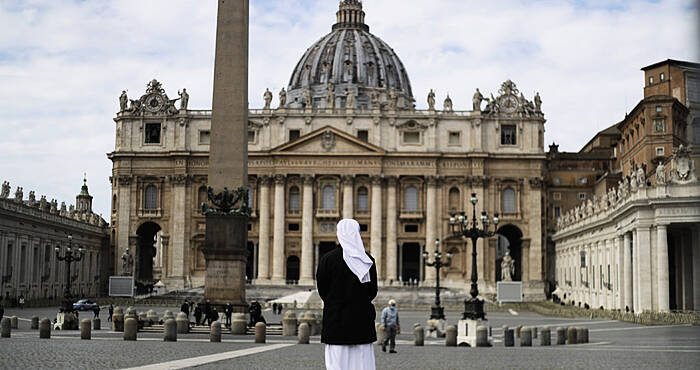
As society becomes more diverse in its views on gender, morality, and ethics, religious figures are tasked with navigating these evolving expectations. The image captures this shift, portraying the cardinals in a moment of humility, seeking forgiveness for past actions. This reflects a broader movement within religious institutions to address past scandals and restore trust with the faithful. The cardinal’s role is no longer simply to lead but to listen, reflect, and engage with the issues that matter to their congregation.
Forgiveness: A Pillar of Christian Teaching
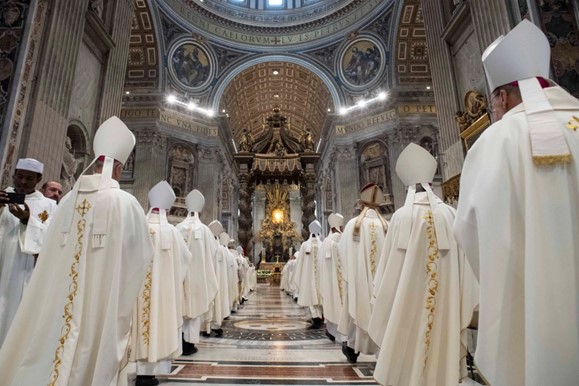
Forgiveness is a core concept in Christian theology. It is not just about absolving personal transgressions, but about creating a path for reconciliation and healing. The cardinals’ actions, seeking forgiveness, may be symbolic of a larger effort within the Catholic Church to repair its relationship with its followers. In recent years, the Church has faced various controversies, some of which have shaken the faith of millions. The call for forgiveness, therefore, is not just theological but also a social necessity. It reflects a desire for redemption not only from personal failings but from the institutional crises that have undermined the Church’s moral authority.
The Dual Role of Forgiveness: Personal and Institutional Reconciliation
In this context, forgiveness represents a dual process. On one hand, it is deeply personal—an individual’s acknowledgment of mistakes and the desire to move forward. On the other hand, it is institutional—an effort by the Church to address its internal issues and reestablish trust with its community. The portrayal of the cardinals in the image conveys both aspects, as they seem to be grappling with their own roles in an institution that has been criticized for its handling of various scandals.
The Generational Divide: Tradition vs. Modernity
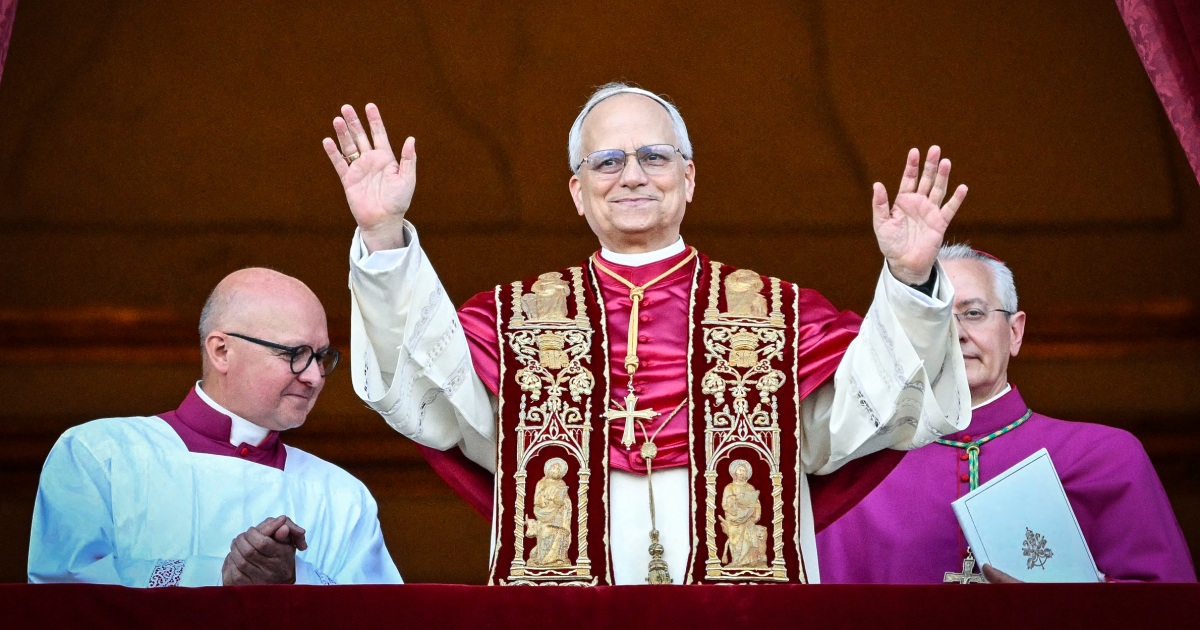
The contrast between the cardinals and the woman in the image also speaks to a generational divide in the way faith is practiced and understood. For younger generations, the traditional structures of the Church may seem disconnected from their lived experiences. Many people today, particularly younger women, are looking for authenticity and inclusivity in their religious practices. The woman in the image symbolizes this search for a more open, transparent, and modern approach to faith, one that is less confined by traditional doctrines.This generational shift challenges the Church’s ability to remain relevant in a world that is changing rapidly. Younger people may find themselves at odds with the doctrines and practices that have been in place for centuries. They may feel that the Church’s teachings are too rigid to address the complexities of their own lives and experiences. In this light, the image of the woman can be seen as a symbol of reform—a call for change that challenges old norms while advocating for a faith that is inclusive and adaptable.