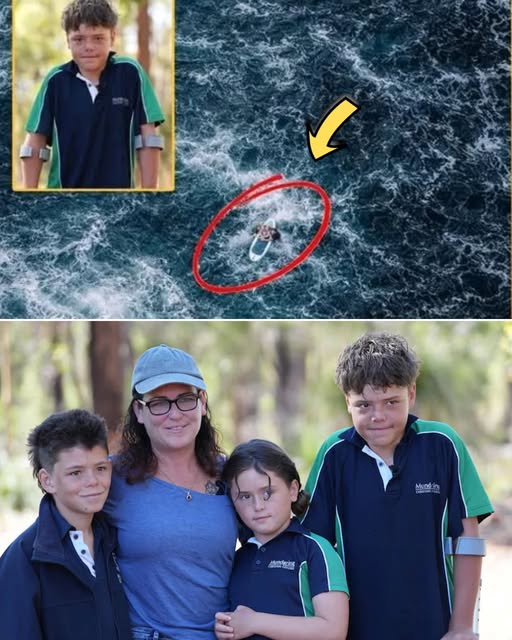

Ripping off his life jacket to swim faster, Austin plunged alone into the churning sea, battling massive waves and exhaustion for nearly four hours across roughly 4 kilometers (2.5 miles) of open water until he reached land, sprinted another 2 kilometers to retrieve a phone, and triggered the massive rescue that saved his entire family.
The Appelbee family—mother Joanne Appelbee, 47, Austin, 12-year-old brother Beau, and 8-year-old sister Grace—were vacationing in Quindalup, about 200 kilometers south of Perth, enjoying the final hours of school holidays. They rented two inflatable stand-up paddleboards and a small kayak from their hotel, planning a relaxed paddle from 10 a.m. to noon. Life jackets on, sunscreen slathered, they launched into the calm waters of Geographe Bay around 11 a.m., blissfully unaware that strong winds were about to change everything.
Trouble struck just after midday. Austin lost his paddle first. Joanne tried to help, flipping her board in the process. Beau paddled out to assist, and soon Joanne’s paddle vanished too. The family was now drifting helplessly offshore as the wind pushed them farther out. They lashed the paddleboards to the kayak and tried to tow the children, but the little boat began taking on water fast. Clinging to the boards in their life jackets, with no food, no water, and no way to call for help, they were being carried out to sea.
Joanne Appelbee made one of the hardest decisions of her life. “What have I done?” she later told reporters, her voice breaking as she recalled the moment. She realized the kayak was sinking and that someone had to go for help. Austin, the eldest and strongest swimmer, volunteered. Joanne sent him ahead, praying he would make it. Austin started paddling back toward shore, but the kayak quickly filled with water. In fading light, he abandoned it and began swimming—first with his life jacket on.
The waves were massive, the current relentless. After about two hours, Austin realized the life jacket was slowing him down, dragging against his strokes. In a heart-stopping choice, he tore it off and continued without it. “The waves are massive and I have no life jacket on,” he later recounted to ABC News. “I just kept thinking ‘just keep swimming, just keep swimming.’ I just said, ‘Not today, not today, not today. I have to keep on going.’”
For nearly four hours, Austin fought through cold, choppy water—mixing breaststroke, freestyle, and survival backstroke. He had recently completed a school holiday swimming program but hadn’t advanced to the next level, yet his determination carried him forward. Shark-infested waters, fading light, exhaustion—none of it stopped him. When he finally hit the beach, he collapsed from sheer fatigue. But the fight wasn’t over. He ran another 2 kilometers along the shore to the family’s accommodation, grabbed his mother’s phone, and called emergency services around 6 p.m.
What followed was a multi-agency rescue operation involving police, helicopters, and emergency crews. At 8:30 p.m., a rescue helicopter spotted Joanne, Beau, and Grace clinging to a paddleboard—now about 14 kilometers (8.7 miles) offshore after drifting for nearly 10 hours. They were winched to safety, cold and exhausted but alive. Austin, meanwhile, was taken to hospital for treatment, using crutches for his sore legs.
Police described Austin’s effort as “superhuman.” Senior Sergeant Matt Bresland praised the teenager’s bravery, noting he swam the first two hours with the life jacket and the next two without it to make better progress. Joanne Appelbee, originally from Ireland, said she was “amazed” at her son’s courage. “I knew he could do it,” she told reporters, tears in her eyes. “I’m speechless at his efforts, but at the same time, I knew he could do it.” Austin himself, humble in interviews, shrugged off the “hero” label: “I didn’t think I was a hero—I just did what I did.”
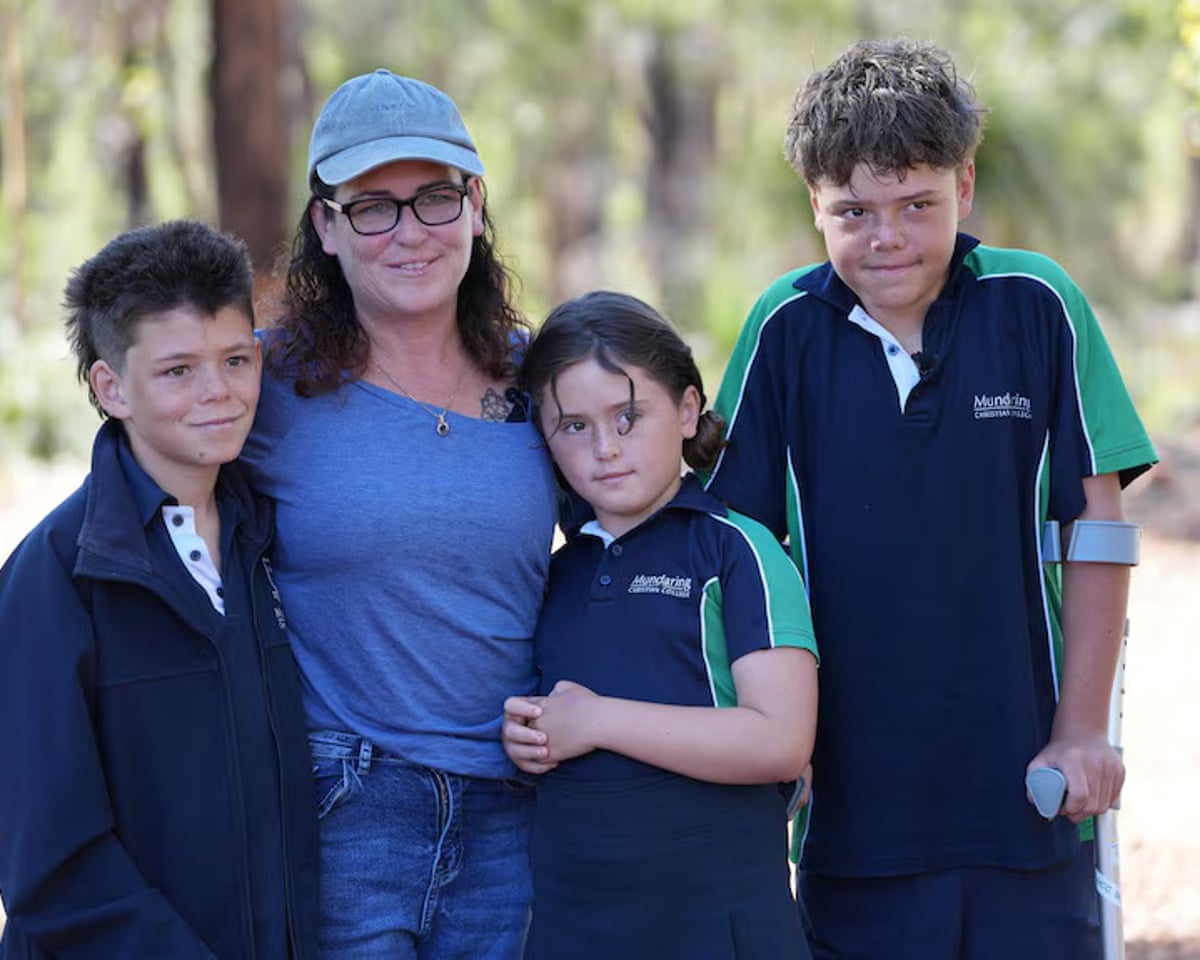
The story has captured hearts worldwide, with tributes flooding social media. “This is courage beyond belief,” one commenter wrote. “A 13-year-old looked at the ocean and said ‘Not today.’” Others called for Austin to receive a medal of bravery. The incident has also raised questions about safety protocols for rented watercraft in changing conditions, with WorkSafe investigating the hotel’s equipment and response.
For the Appelbee family, the ordeal ended in reunion and gratitude. Joanne credits Austin with saving them all. “He’s my guardian angel,” she said. Austin, recovering from the ordeal, remains modest: “I just kept swimming.”
In a world often quick to highlight tragedy, Austin Appelbee’s story stands as a beacon of hope and raw human spirit—a reminder that even in the face of overwhelming fear, one child’s refusal to give up can change everything.